

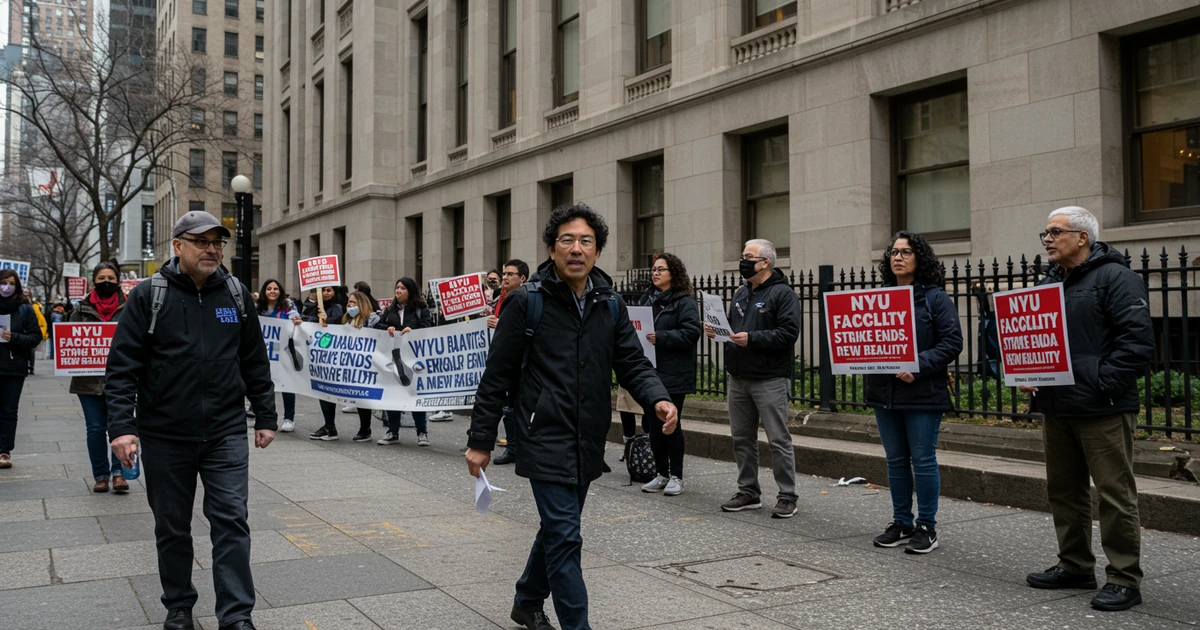
A disruptive two-day faculty strike that canceled a quarter of all classes at NYU has concluded, with the university administration and its non-tenured faculty union reaching a landmark tentative agreement. Our team has confirmed that this deal, reached in the early hours of Wednesday morning, averts a prolonged crisis at one of the nation’s largest private universities and introduces what the union is calling the “highest minimum salaries of any unionized full-time, non-tenure track faculty in the country.” This turn of events at NYU could set a significant precedent for higher education labor disputes nationwide.
→ Silvino Louro Deixa Legado Imortal: O Adeus ao Fiel Escudeiro de Mourinho
- A tentative contract agreement was reached between New York University and the Contract Faculty United-UAW, ending a two-day strike that began on March 23.
- The agreement includes what sources call a historic average first-year raise of approximately 20%, with new base salaries starting at $91,000 in the fall.
- The strike involved over 900 professors and impacted roughly 25% of classes, affecting thousands of students as they returned from spring break.
What Led to the Brink at NYU?
The situation escalated after more than 17 months of negotiations failed to produce a contract. The core of the dispute, as our analysis of union statements and reports shows, was the widening gap between faculty compensation and the soaring cost of living in New York City. The Contract Faculty United-UAW, representing about 930 full-time professors not on a tenure track, argued that many of its members struggled to afford living in the city they teach in, with some holding multiple jobs to make ends meet.
Industry insiders note that the pay disparity between contract and tenured faculty was a major catalyst. The union highlighted that its members, who constitute nearly half of the full-time teaching staff, were fighting for fair compensation, stronger job security, and better benefits, including housing assistance. As talks stalled, 75% of the union’s members voted to authorize a strike, signaling a deep-seated frustration that the university, in their view, was not bargaining in good faith. The administration, meanwhile, had described its offer prior to the strike as “market-leading.”
What Does the New Agreement Actually Deliver?
The tentative agreement represents a significant shift. Our team has analyzed the details released by both the union and the university, and the gains for the faculty are substantial. The deal, which must still be ratified by a vote of the union’s members, marks a pivotal moment for the NYU community.
Beyond the headline-grabbing 20% average raise, the agreement establishes a new financial reality for these educators. According to a statement from the union, the deal secures the “highest minimum salaries of any unionized full-time, non-tenure track faculty in the country.”
| Key Provision | Details of the Tentative Agreement |
|---|---|
| Minimum Salaries | New base salary of $91,000 starting in September, with 95% of members set to earn over $100,000. |
| Immediate Raises | A $6,000 raise for the current academic year, with a minimum raise of $14,000 by the next academic year. |
| Annual Increases | Guaranteed 3.5% annual raises beginning in 2027. |
| New Benefits | Establishment of a new $1 million family care benefit fund. |
| Development Funds | Minimum of $2,500 in annual professional development funding for each member. |
These terms address many of the core financial insecurities that drove the faculty to the picket lines. According to a detailed report from CBS News, the university has also committed to enhanced health and welfare benefits.
What Does This Mean for Students and the Future of NYU?
For students, the immediate result is a return to normalcy. Classes that were staffed by substitutes or canceled are expected to resume with their regular instructors. However, the strike has illuminated the working conditions of the faculty who teach a significant portion of the university’s courses. Student support for the striking professors was visible, with many joining the picket lines, as noted in discussions on a Reddit megathread on the r/NYU subreddit.
Our analysis suggests this event may reshape the internal dynamics at NYU. The administration, while calling the strike “unnecessary,” ultimately moved to meet the union’s demands, a decision that will have long-term financial and cultural implications for the institution. The agreement could lead to a more collaborative relationship between the administration and its non-tenured faculty, who now have a powerful, enforceable contract. The university’s statement emphasized a commitment to recognizing the faculty’s contributions and ensuring a “sustainable and fair agreement.” This resolution at NYU is a clear signal that the concerns of contract faculty are a powerful force.
Is This a Blueprint for Other Universities?
Industry insiders are watching the NYU situation closely, as it may serve as a blueprint for similar labor movements across American higher education. The successful push by the CFU-UAW is part of a broader trend of academic labor organizing. As reported by Bloomberg Law, this was the first strike for a first contract at a major private U.S. university in recent memory, making its outcome particularly influential.
The context is critical: graduate student workers at nearby Columbia University have also recently authorized a strike, citing similar cost-of-living pressures. The success at NYU in securing major concessions on salary and benefits will likely embolden other academic unions. Universities nationwide, especially those in expensive urban centers, may now face increased pressure to address the compensation and job security of their non-tenured teaching staff. The power of collective action, amplified by social media and student solidarity, has proven to be a formidable force. The NYU strike is a testament to this new era of academic labor relations.
Relevant posts
- Escândalo Chocante: Gianluca Prestianni Arrisca Carreira no Benfica Após Abuso a Vinícius Jr.
- Paralisação Iminente: Greve 23 Março 2026 Ameaça Colapsar Serviços Públicos em Portugal
- Desabafo de Estrela: Kenneth Taylor Revela a Transferência Frustrada que o Deixou de Coração Partido
Visit atualdiario.com for more stories.